Posts

Review: Stays and Corsets, by Mandy Barrington

Image
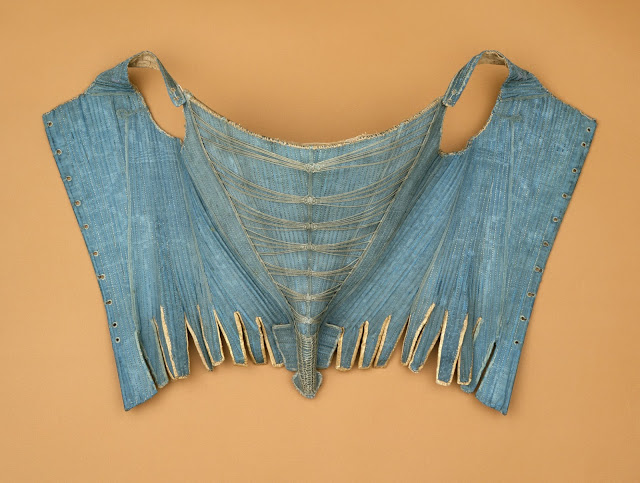
I feel terrible that it took me so long to write a review of this book, seeing as I was sent a copy by Focal Press - but I promise it was only because I intended to use it to make a set of stays and/or corset first! And then, unfortunately, I did next to no sewing since receiving it, and so I'm reviewing from a more theoretical basis. Stays and Corsets: Historical Patterns Translated for the Modern Body  is by Mandy Barrington, a senior lecturer in costume at Arts University Bournemouth. (She hasn't posted to Tumblr in a while, but you can see some great images of her work there!) The book consists of thorough instructions on drafting corset patterns based on patterns of extant pieces and modern bodice slopers, similar to the system used in Creating Historical Clothes . (And, incidentally, it teaches you how to draft your own slopers from scratch.) The patterns it contains are as follows: - 1735-1750 sleeved stays (with stomacher; sleeves not included) - 1776 half...
Stay-Dating

Image
My latest project is a proposal for a book written specifically to help out costume designers and writers of historical fiction - a fashion history manual for 1700-1940 that focuses on visuals and on how the clothing works. The first chapter, on the early 18th century (1700-1739), is my sample, and it's making me realize how brushily  we tend to deal with the period before the changes of the 1770s, and especially before the 1750s. I'm pinning down a lot of stylistic changes to at least halves of decades, but I'm finding stays surprisingly difficult. Like a lot of other aspects of fashion I've had to work out, the issue's complicated by museum dates that seem overly broad or just plain wrong. And for stays, there are considerably fewer artistic representations than there are for gowns, caps, etc.! I think I've been able to identify the differences between early-century and 1775-1795 stays - which was tricky, because a lot  of earlier stays were dated later. W...

Midwest Historic Costume Conference

Image
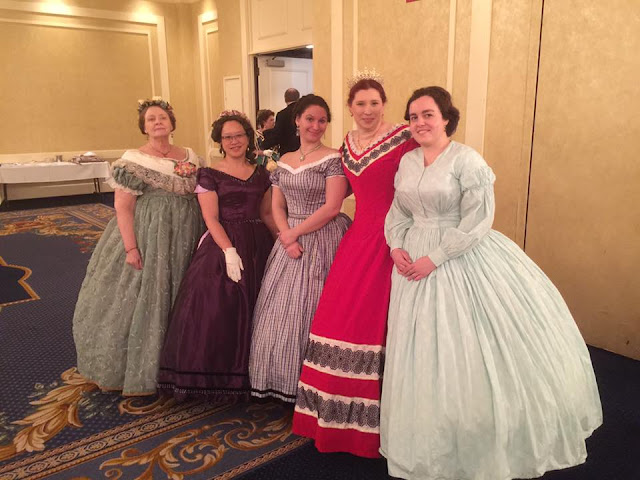
Big news! Following Julie's success at managing the Ohio Regimental Military Ball , we've decided to attempt holding a Midwest Historic Costume Conference in 2018. I'm so important, I got to sit at the President's Table! (Mrs. Lincoln, far left.) To that end, we've put up a survey to gauge interest. We do  have a bunch of plans, we just want to see what others think of various options before we solidify anything. Follow the MHCC page on Facebook to keep up with the con, and please tell your friends!

Not moving, but not standing still

I've been in a reading/writing/sewing slump for a good handful of months now, due to a number of factors: - The last dress I tried to make for myself ended up looking terrible, due to the fabric being too polyestery and stiff for the design, and to the fact that the cut of the bodice is really bad for someone this short-waisted. - I've been gaining weight, slowly enough that I didn't really notice until suddenly it hit me that I was dissatisfied with all my clothes because they were just  too tight to be comfortable or look good. I'm working on the weight issue, but I just can't gather the will to sew any new clothes for work. - Cameo is deceptively difficult, at least in the Made to Fit custom sizing module. My pattern files keep becoming uneditable, which is obviously a problem if you're still in the working-draft stages! - For a while, I was being really active in a few historical fashion Facebook groups, and the neverending fight to get good contribu...

Review: An Agreeable Tyrant

Image
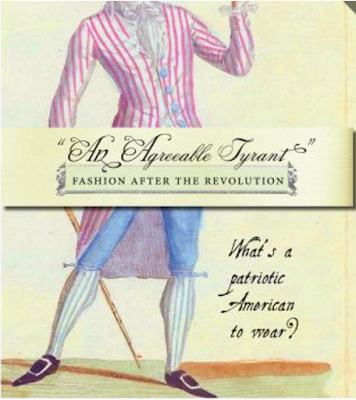
I ordered "An Agreeable Tyrant": Fashion after the Revolution  the moment that Alden O'Brien posted about its availability on Facebook. Full disclosure: I borrowed this picture of the cover from 2NHG but did not hotlink it The eponymous exhibition opened this month at the Daughters of the American Revolution Museum in Washington, D.C. and will run until April 2017: it focuses on American men's and women's dress from the end of the Revolutionary War to 1830. And you really want its catalogue! Not only does it have beautiful photography of the exhibition, it features a number of well-cited essays on the period that are great reading. The book opens with "After the Revolution: Aspirations and Ambivalence," by the DAR Museum's curator of costume and textiles, Alden O'Brien, on the subject of Federal-period Americans' difficult feelings for fashion as they attempted to balance a desire for luxury with moral concerns (and also dealing wit...

Miner Street, Canton, in 1900

Image
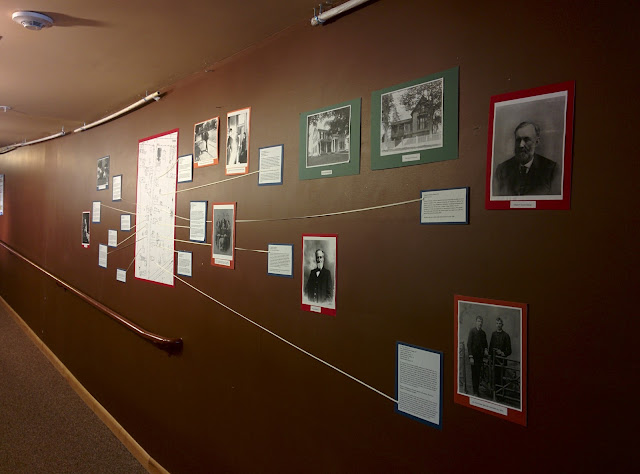
I can't believe I've been working on this exhibition since the spring . Well, technically, I spent quite a few months in between researching a walking tour of Main Street - originally my brother agreed to make an ambitious app for it, which was then scaled back into a page on our website, and then recently I found that The Clio Foundation  is developing something to allow exactly the kind of tours I want to create, so that isn't available yet. The exhibition itself went up very smoothly. As you can see, it's not large - just one short stretch of wall next to and running up the side of our narrow ramp. To the right is the intro text: Imagine yourself back in Canton in the year 1900. Walking down the north side of Main Street from the Silas Wright House (at this time being used as a parsonage for the newly-rebuilt Universalist Church), you pass most of the same buildings that you know today with different occupants – the Remington Corner Clothing Store, Conkey’s ...

Book Review: The Long Weekend, by Adrian Tinniswood

Image
I picked out The Long Weekend: Life in the English Country House, 1918-1939  from NetGalley to review here as the country house has such a prominent place in classic and historical fiction - think of how many mysteries wouldn't exist without characters being cooped up together for a country weekend! The book is exhaustive - Tinniswood goes through all the aspects of the country house itself, from architecture to interior decoration to sale to (royal, aristocratic, and common) owners, with detailed descriptions of how these went down at various specific estates. The social aspects, unfortunately, don't seem to get as much time as the others (or perhaps the architecture and interior design chapters simply seemed very, very long?). Country house parties are dealt with at the very beginning, and then at the end there's discussion of gay country house owners, hunting and fishing, the servants, politics, and the collapse of this culture during WWII. Ultimately, I'm not...