Posts

Galerie des Modes, 38e Cahier, 6e Figure

Image
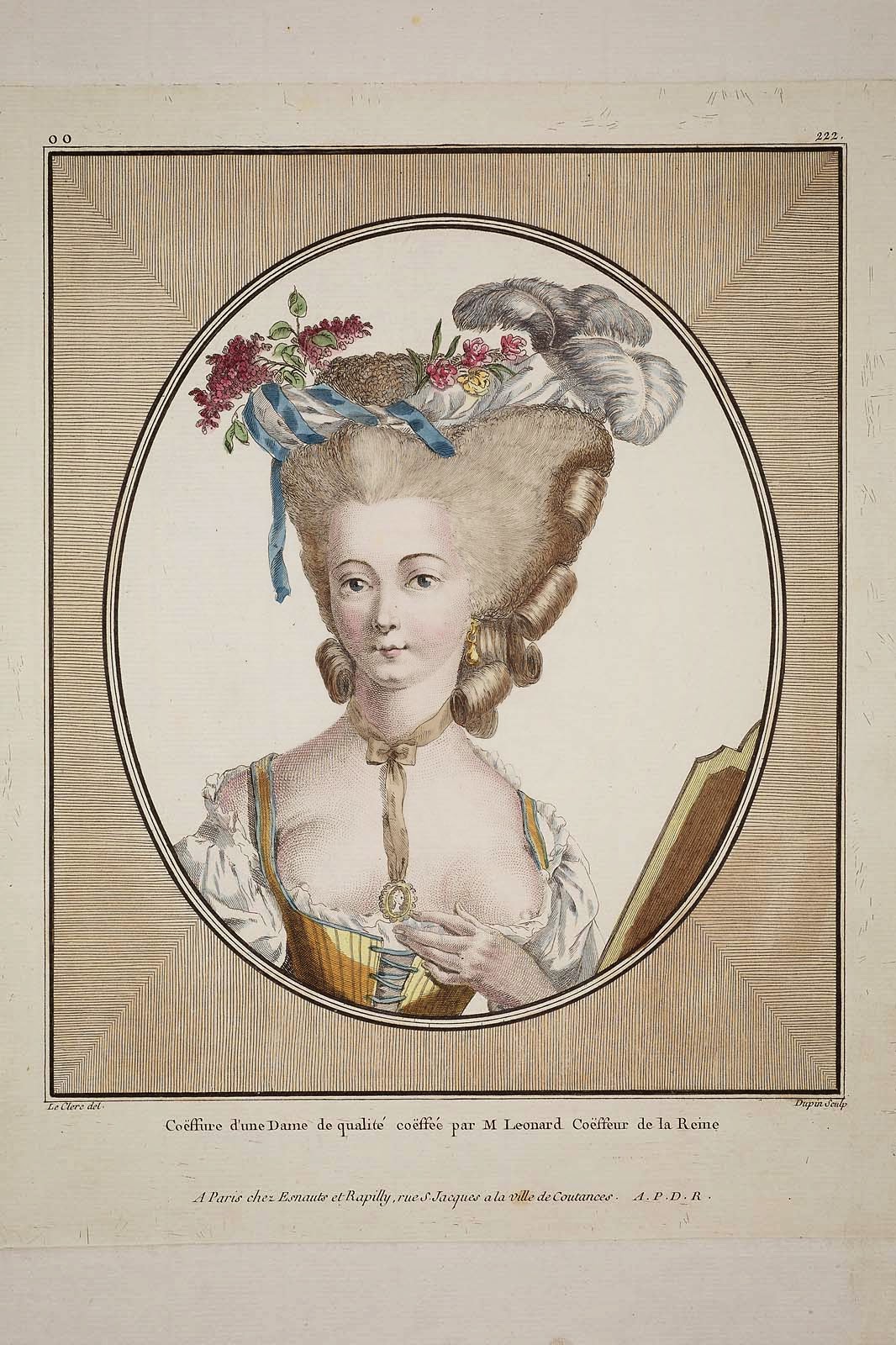
Boston MFA 44.1531 Coiffure of a Lady of quality, done by M. Leonard, Hairdresser to the Queen. ( 1781 )

Galerie des Modes, 38e Cahier, 4e Figure

Image
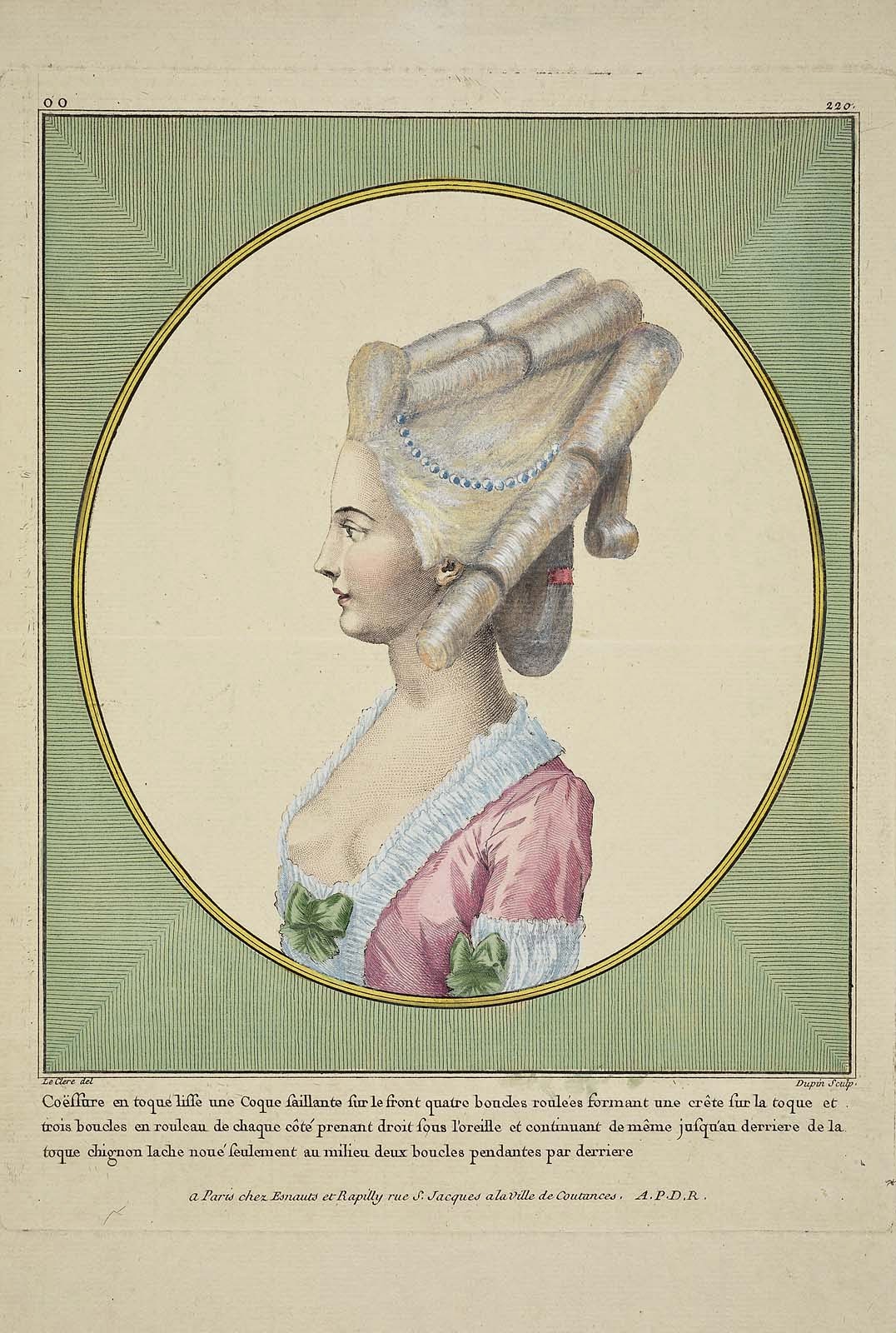
Boston MFA 44.1529 Coiffure in a straight  toque , a  Coque  protruding over the forehead; four rolled curls forming a crest on the toque  and three rolled curls on each side, going straight from under the ear, continuing in the same way to behind the toque ; loose chignon  tied only in the middle; two curls hanging in back. ( 1781 )

Galerie des Modes, 38e Cahier, 3e Figure

Image
Boston MFA 44.1528 Coiffure called à la Princesse : a low toque in front, the Coque  a little protruding, a frizzed area raised over the whole, edged with a row of little curls in hair roses, separated from the toque by a ribbon bandeau. Three curls on the sides, two hanging baton curls at the height of the loose Chignon. A gauze Pouf  artistically placed at the top of the head; a panache  on the left side of the front, composed of two aigrette plumes, a Heron feather, and a very supple one called a Follette , because it plays with grace. If you want, flowers may be added to this Coiffure, as shown here. ( 1781 )

The Nightgown (and the Negligee) (HSM #3)

Image
(My version of "stashbusting" - the Historical Sew Monthly challenge for March - means finishing a post that had been languishing in my drafts for some time.) The term "nightgown"/"night gown", as used in the 18th century, is somewhat confusing. J. P. Ryan defines an English nightgown as synonymous to robe à l'anglaise , a fitted gown. The Dictionary of Fashion History defines it as "an unboned, loose dress worn for comfort and usually informally." These definitions are polar opposites! The latter appears to be drawn from period dictionaries, which refer to a man's garment and/or an older usage, based on the examples they use. In reference to women's daily dress rather than nightclothes, the term appears as early as the 17th century: From the  Trial of Ford Lord Grey of Werk, et al. 1682 , published 1712. "Woman of quality, in summer dress", Nicolas Arnoult, 1687; LACMA M.2002.57.67 At this point, women...
Exciting News!

I've been gradually releasing this announcement over various platforms as things get more solid. This is a pretty serious platform, so I wanted to wait until everything was totally and completely for certain. (I'm writing this ahead of time, when things are only about 99.9999% certain, and I'm so nervous about that last 0.0001%, I can't even.) Starting very soon, I'm going to be the collections manager/educator at the Silas Wright House/St. Lawrence County Historical Association (http://slcha.org/)! This is it, this is the first step in my career, my first permanent position in a museum. This is terrifying and unsettling. This probably means not too much for the blog. I should be able to manage a job as well as one post a week! If anything, I may get to write about specific objects in the collections or people and events of the area, either for myself or for the museum. Also, you know what's really my bag. Patterns. Access to what looks like a pretty sizable ...

Galerie des Modes, 38e Cahier, 2e Figure

Image
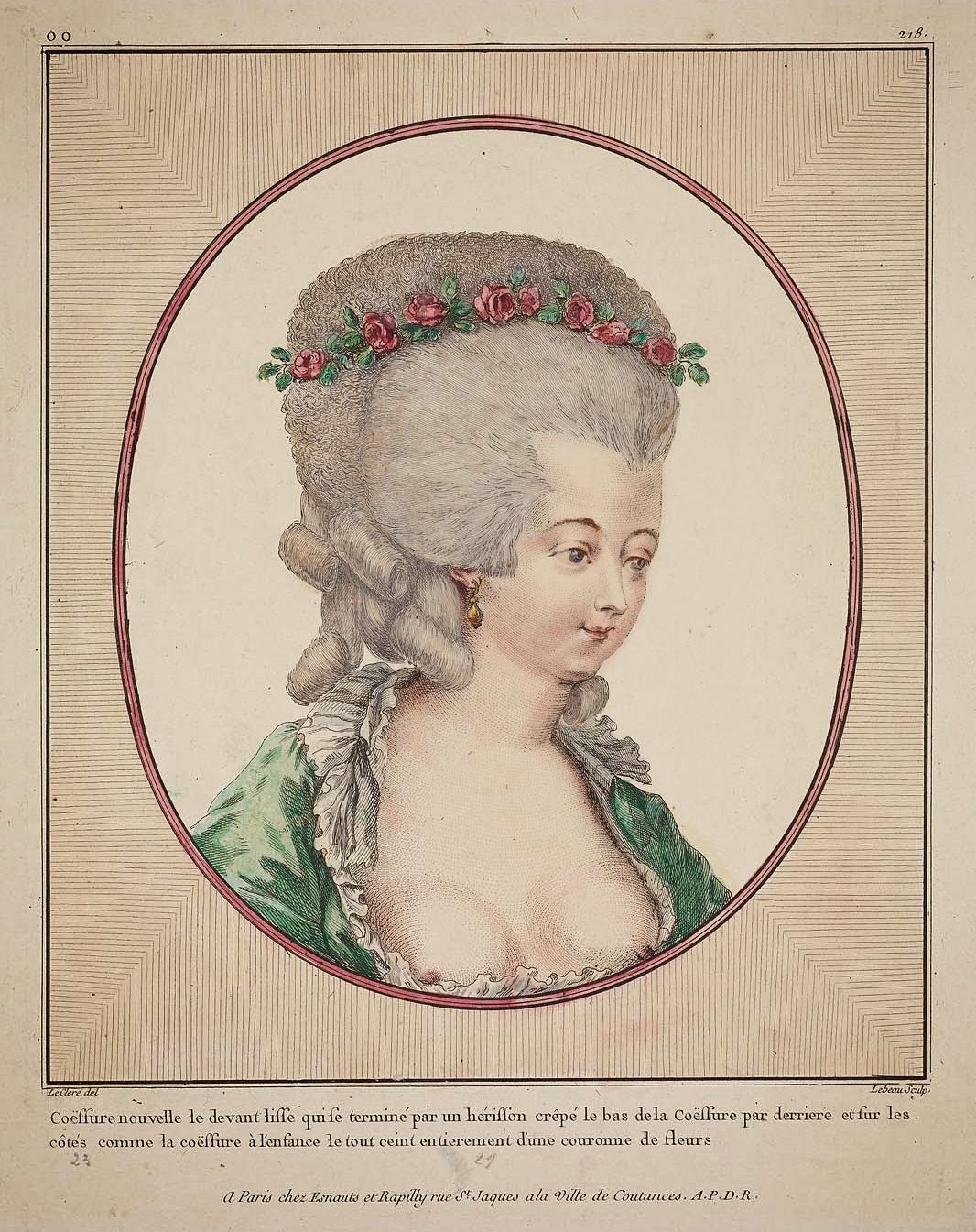
Boston MFA 44.1527 New coiffure: the front straight, ending in a frizzed  hérisson , the bottom of the Coiffure in the back and on the sides like the coiffure à l'enfance . The whole wrapped with a flower crown. ( 1781 )

Galerie des Modes, 38e Cahier, 1ere Figure

Image
(Way back when I was translating the Galerie , I came to two books - the 38th and 39th - which weren't included in the reprint. From the index, I could see that they were coiffures, and since they seemed less pressing than the gowns I let them wait. And then I forgot about them.) Boston MFA 44.1526 Coiffure of a white straw hat edged with a colored ribbon. Crown surrounded by a wide ribbon, with a bow in the front. It is decorated with flowers and covered with straight hair over a toque which is low in front and larger in the back. Two curls and a favori; loose chignon and two curls hanging in back. ( 1781 )